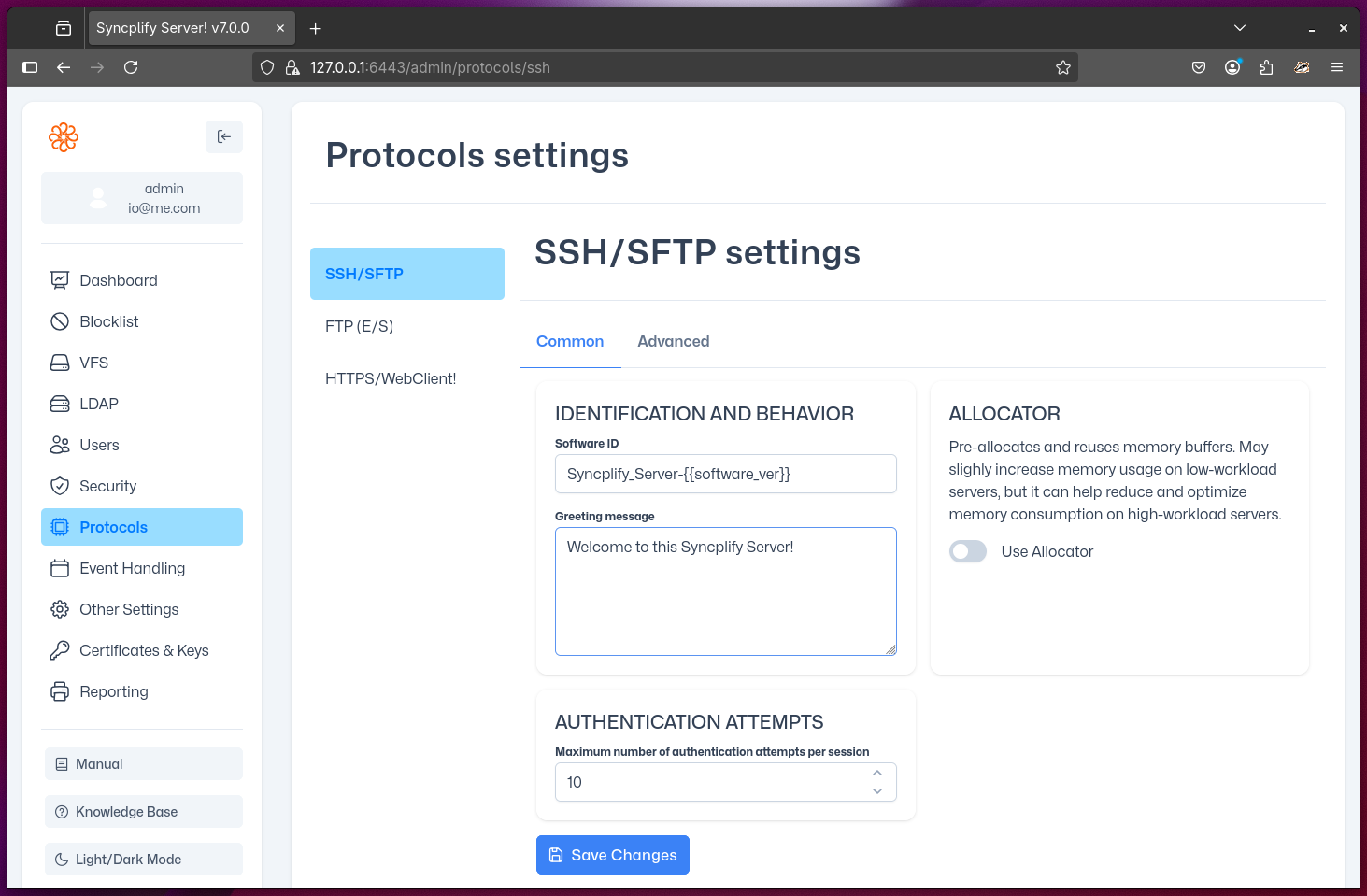
General SSH/SFTP Settings
IMPORTANT
The SSH2 protocol and its subsystems (including SFTP and SCP) are defined in several RFCs, such as RFC 4251 (SSH Protocol Architecture), RFC 4252 (Authentication), RFC 4253 (Transport Layer Protocol), RFC 4254 (Connection Protocol), and RFC 4256 (Keyboard-Interactive Authentication). Administrators configuring SSH/SFTP servers should be thoroughly familiar with these RFCs to ensure secure and standards-compliant operation.
This section allows you to configure basic and general settings for the SSH, SFTP, and SCP protocol handlers. Here are a few important details about each option:
- Software ID: This field must comply with the SSH2 protocol standard for software identification. It is sent to clients during the initial handshake and may be visible in client logs.
- Welcome message: A free text field shown to SSH/SFTP clients that support this feature (note: not all clients display it). This field supports pre-processor variables for dynamic content.
- Use allocator: When enabled, the server pre-allocates memory slices. This can increase memory usage under light server loads, but may help decrease memory consumption and improve performance under very high server loads.
- Authentication attempts: Sets the maximum number of authentication "rounds" allowed within a single SSH client session before the server disconnects the client. Each failed attempt also counts as a strike toward automatic block-listing of the offending IP address by Protector™.